
_______________________________________________________________________
Noticing pain in the back of your heel after a walk, run, or workout? Wondering if it could be your Achilles tendon? Keep reading to learn more about Achilles tendinopathy!
_______________________________________________________________________
1. What is the Achilles tendon, and what is tendinopathy?
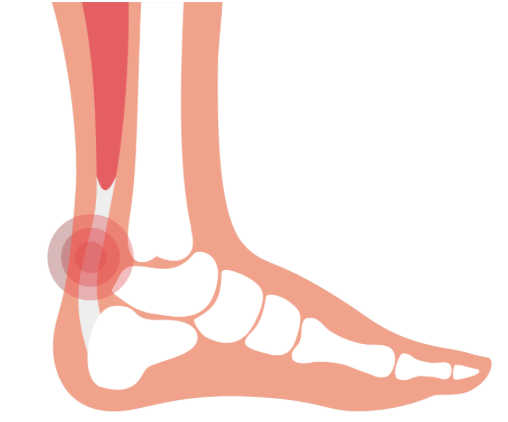
Your Achilles tendon is the thick band of tissue that connects your calf muscles to the back of your heel. It helps transfer force from your calf muscles to your foot, allowing you to walk, run, jump, and rise onto your tiptoes.
Achilles tendinopathy occurs when the tendon struggles to handle the amount of stress being placed on it. Over time, changes within the tendon can affect its ability to tolerate load, leading to pain and stiffness.
The important thing to understand is that your tendon isn't necessarily damaged or "broken" — it may simply need some help building back its capacity to handle the demands you're placing on it!
_______________________________________________________________________
2. What can cause Achilles tendinopathy?
One of the most common causes is overloading the tendon by doing too much, too soon, without enough time to adapt and recover.
A few examples:
- Increasing your running distance too quickly (i.e. going from 1–2 miles to 6–7+ miles)
- Running multiple days in a row without adequate recovery
- Suddenly increasing jumping, sprinting, or sports activity
The takeaway? Your Achilles tendon is designed to handle load! It just needs the right balance of activity, recovery, and progressive strengthening to keep up with your demands.
_______________________________________________________________________
3. What are other factors that can contribute to Achilles tendon pain?
Training load isn't the only factor! Other things that can contribute to Achilles tendon pain include:
- Limited calf flexibility or ankle mobility
- Decreased calf strength or endurance
- Changes in movement patterns or running technique
- Poor recovery or difficulty keeping up with training demands
It's important to look at the whole picture, since there may be multiple factors contributing to your symptoms—not just the tendon itself! That's where I come in to help! 😉
_______________________________________________________________________
