
Ready, Set, RUN….But What If It Hurts?
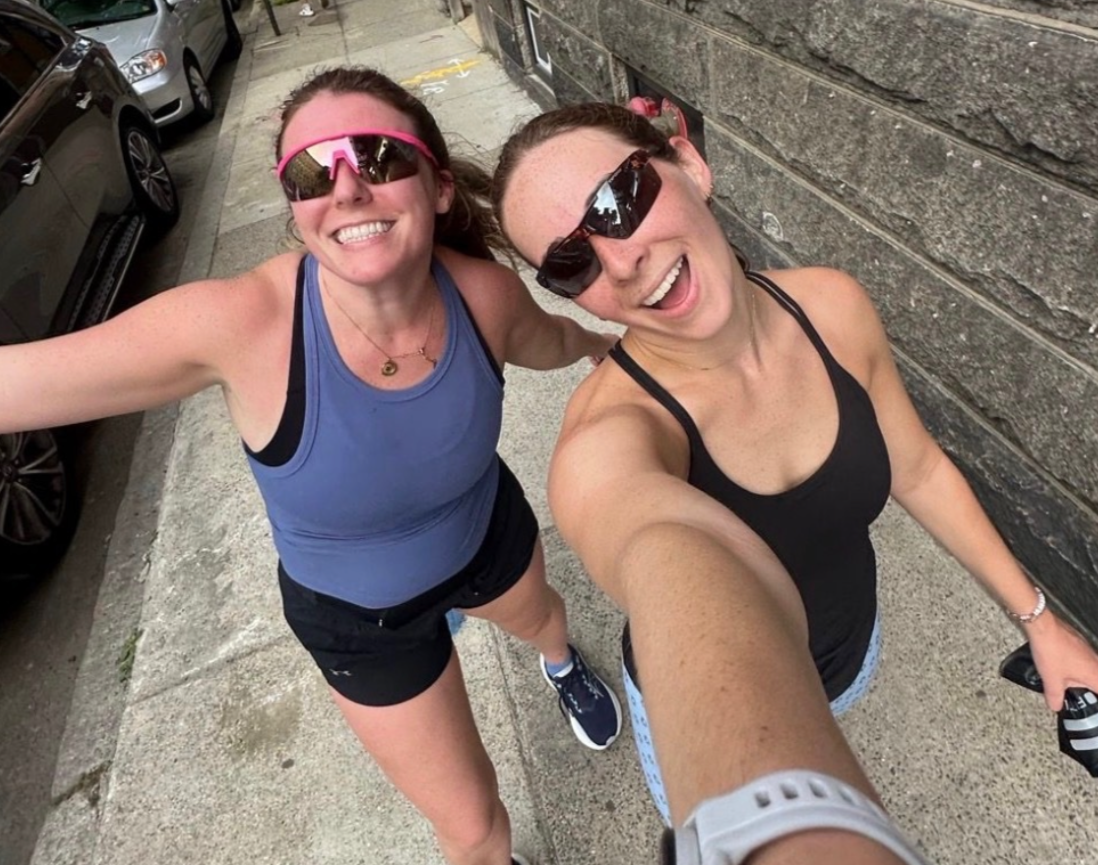
My sister Meghan (left) after a training run for the Chicago Marathon!
_______________________________________________________________________
I already can’t believe summer has turned into fall!
And you know what that means… Darker evenings, spooky season, pumpkin spice lattes, ANDDDDDD…
…marathon season! 🏃♀️
Fall brings some major running events, including the New York City Marathon, Chicago Marathon, Indianapolis Monumental Marathon—the list goes on!
And for some runners, marathon training also brings something a little less exciting: running injuries.
_______________________________________________________________________
One of those runners happens to be my younger sister, Meghan!
Meghan has been training for the Chicago Marathon while balancing the insanely wacky schedule of a flight attendant (serious kudos to her). Along the way, she started having some recurring knee and calf pain while running.
Like many runners, she continued training and tried to push through it—including through her long runs.
One thing I pride myself on NOT doing as a physical therapist is prescribing a bunch of exercises or treatments without first figuring out what is actually going on.
Without a full evaluation, I’m essentially throwing darts with my eyes closed and hoping I hit the bullseye.
What I really needed to do was assess the whole picture: her mobility and range of motion, strength, movement patterns, running mechanics, training load, symptoms, and anything else that could be contributing to her pain. From there, I could develop a plan that actually made sense for her and her goal of finishing marathon training strong.
The problem?
My little sister lives all the way in Massachusetts, so a full evaluation with me was obviously out of the question.
I gave her a few exercises to try, which did help improve her symptoms somewhat. But my biggest recommendation was still to see a physical therapist in person—someone who could actually assess her, figure out what was contributing to her pain, and give her a plan to carry her through the final weeks of marathon training.
_______________________________________________________________________
It took a few weeks of convincing (little sisters, am I right?), but she finally took my advice and made an appointment with a physical therapist I recommended.
After her appointment yesterday, she texted me saying she left feeling like she finally had some answers about what was going on. She was able to get a hands-on assessment, start treatment to help calm her symptoms, and receive a personalized exercise program to carry her through the rest of her training.
Most importantly, she now feels more confident moving forward with her training plan.
And THAT is exactly why a full physical therapy evaluation matters.
Physical therapy should be about more than being handed a few exercises and sent on your way. A thorough evaluation allows your physical therapist to put the pieces together and better understand why you’re experiencing pain or an injury—not just where it hurts. From there, you can create a plan to address those findings and, most importantly, have guidance on how to safely keep moving toward the activities and goals that matter to you.
_______________________________________________________________________
So if you’re a runner—or really anyone—who is dealing with pain or an injury while training, I only ask one thing:
Please don’t ignore it.
You don’t necessarily have to stop everything. And you don’t have to wait until the pain becomes unbearable.
Go get it checked out.
Whether that’s with me, another physical therapist you already know and trust, or someone your doctor, coach, or running community recommends, get some answers before continuing to guess your way through it.
Your training matters. Your goals matter. And you deserve a plan that is based on what’s actually going on—not a guess.
